
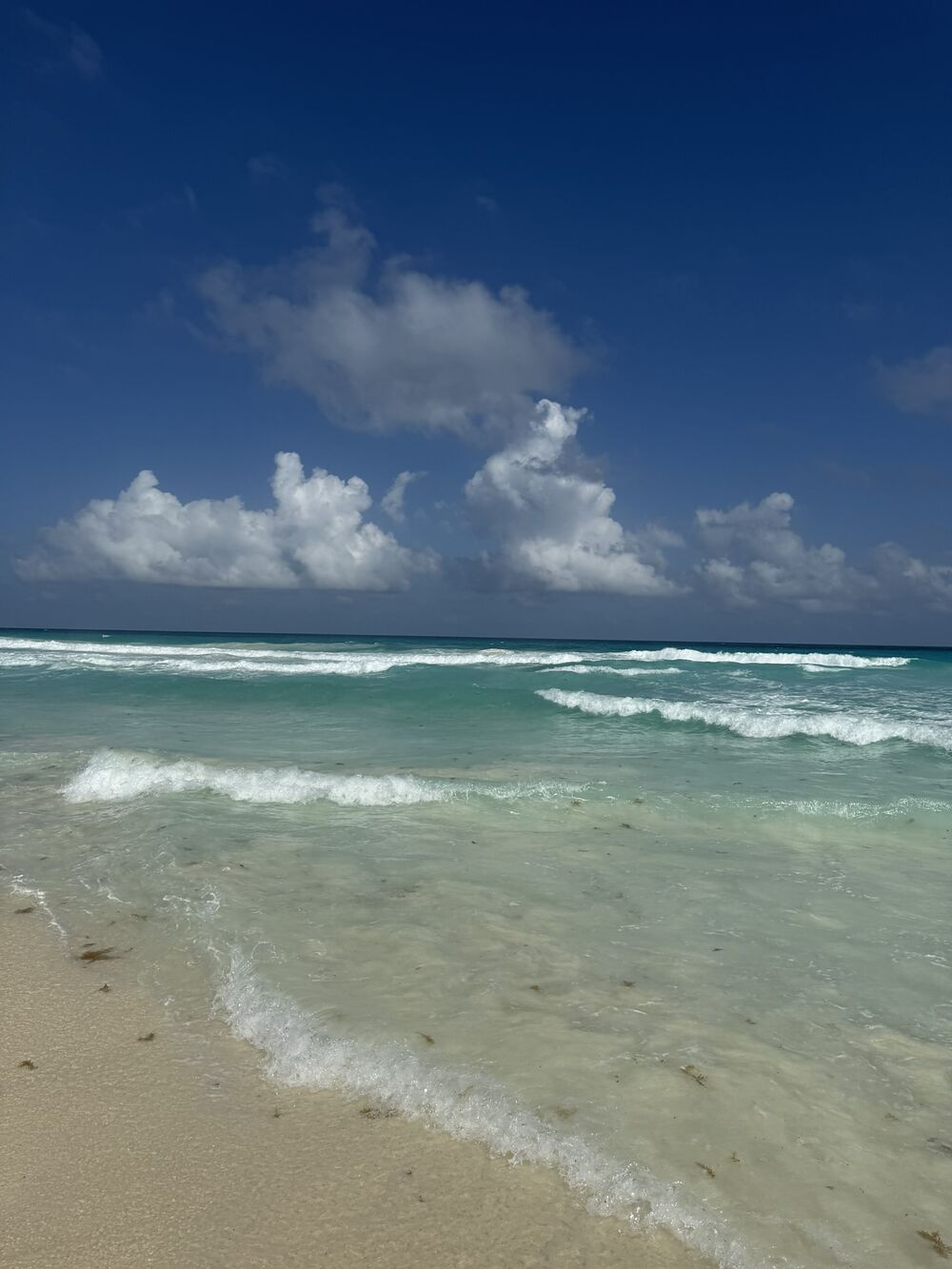
Getting tattooed on a trip is one of the best things we help people do. A piece you got in Tulum or Osaka carries the place with it forever. But there is a version of this that goes badly, and it almost always goes badly for the same reason: somebody got tattooed on day two and then went in the ocean on day three.
This is the part where we are going to sound like your mother. We are fine with that, because the sources here are not opinion.
How long healing actually takes
Mayo Clinic: most tattoos take about two weeks to heal (Mayo Clinic). That is the surface. Deeper settling takes longer.
Something worth knowing before anyone quotes a routine at you with total confidence: the European Academy of Dermatology and Venereology’s own patient guidance states plainly that a gold standard aftercare protocol does not exist. What it does set out is hygiene basics, and they are not complicated. Limit touching. Wash your hands first. Keep any clothing that contacts it clean. Showering is fine, with plenty of water, minimal soap, a rinse, and dabbing dry with a clean towel or air drying (EADV Tattoo Aftercare leaflet).
So if two artists give you different routines, they are not necessarily contradicting each other. There is no single agreed protocol to contradict.
Water is the actual problem
This is the section that changes itineraries.
Ocean, lakes and rivers
The CDC is unambiguous: stay out of the water if you have an open cut or wound, and if you must go in, cover it completely with a waterproof bandage. Contaminated water can enter open wounds and cause infection (CDC). A fresh tattoo is an open wound. That is not a metaphor.
Coastal salt water carries a specific risk. Vibrio infections occur when an open wound contacts coastal water, and Vibrio vulnificus can require intensive care or amputation. About one in five people infected die, sometimes within a day or two (CDC). The CDC issued an advisory in 2023 on rising severe cases linked to warming coastal waters (CDC HAN 00497).
We are not telling you this to frighten you out of a beach holiday. We are telling you because “just a quick dip, it will be fine” is the most common sentence in this entire subject and the odds are genuinely not zero.
Pools and hot tubs
Inadequately disinfected water grows Pseudomonas aeruginosa, which causes hot tub rash, swimmer’s ear and hot hand-foot syndrome. A 2023 outbreak at a hotel pool in Maine affected 23 people. The CDC recommends at least 1 ppm free chlorine (CDC MMWR, 2024). Hot tubs are worse than pools, because heat degrades disinfectant faster and the water is shared by more skin.
Sun, which is the other half
The American Academy of Dermatology advises broad-spectrum, water-resistant SPF 30 or higher, applied 15 minutes before going outside and reapplied at least every two hours. UV light fades ink. Tanning beds and sunlamps should be avoided and can trigger a painful reaction with ink. The AAD also advises against petroleum-based products, which can fade ink, and suggests siting tattoos on mole-free skin because tattoos make early signs of skin cancer harder to spot (AAD).
On a healing tattoo the stakes are higher than fading. UV exposure can prompt a healing tattoo to scar or scab (Journal of Clinical and Aesthetic Dermatology). The same review found that only 84 percent of surveyed artists give any aftercare instructions at all, and just half of studio websites mention sun protection. Do not assume you will be told.
The practical version: for the first couple of weeks the answer is not sunscreen, it is fabric. Keep it covered. Sunscreen goes on once it is healed, and then forever.
The risk almost nobody mentions: the ink itself
This one matters most when you are choosing where to get tattooed abroad.
The CDC documented a multistate outbreak of nontuberculous mycobacterial skin infections traced to a nationally distributed pre-diluted grey ink. Nineteen infections occurred among a single artist’s clients in Monroe County, New York, and Mycobacterium chelonae was cultured from an unopened bottle of ink (CDC MMWR). Unopened. The contamination was in the product, not the studio.
A peer-reviewed scoping review to December 2024 counted 66 tattoo-related cases across 15 countries involving 310 people, including 25 outbreaks accounting for 262 of them, with several requiring surgical excision (2025 scoping review). Outbreak precedents include cases documented in the New England Journal of Medicine and a Florida Department of Health investigation.
The common mechanism in a lot of these is water used to dilute ink. Which is exactly why we ask about ink sourcing and dilution practice when we vet a studio somewhere unfamiliar, and why “the reviews were good” is not a hygiene assessment.
Mayo Clinic also notes that red ink is the most allergy-prone and that reactions can appear years later. If you are in the EU, one genuine reassurance: since January 2022, REACH restricts carcinogens, mutagens, reprotoxins and skin sensitisers in tattoo inks EU-wide (ECHA).
What we will not tell you
Everyone asks about flying with a fresh tattoo. We looked properly for a health authority, dermatology body or peer-reviewed source on cabin pressure, swelling and dressings at altitude, and there is not one. Everything circulating is commercial content from studios and product sellers.
So we treat it as artist practice rather than medical guidance, we apply ordinary wound-care logic from the CDC and EADV, and we tell you it is unsourced instead of inventing authority we do not have.
So sequence the trip properly
All of the above sounds like an argument against getting tattooed on holiday. It is not. It is an argument against getting tattooed on day two.
- Put the tattoo at the end. Beach, pool, snorkelling and hot springs first. Tattoo in the last day or two. You lose nothing and you avoid all of it.
- If it has to go early, book the water out. Plan those days as interior days: food, city, studio visits, driving, markets. Then it is a plan rather than a disappointment.
- Cover with cloth, not sunscreen, for the first two weeks. Loose, clean, natural fibre.
- Skip the hot tub entirely. There is no version of a healing tattoo and a shared hot tub that we would sign off on.
- Vet the ink, not just the portfolio. Sourcing and dilution practice. Ask, or have us ask.
- Leave a buffer before flying home. Not because we can prove it matters, but because you want to still be near the artist if something looks wrong.
Get the running order right and there is no trade-off at all. That sequencing is genuinely half of what tattoo tourism planning is, and it is the half people do not know they need until it is too late to fix.
None of this is medical advice. If a healing tattoo becomes hot, swollen, increasingly painful or starts discharging, see a doctor rather than a forum.