
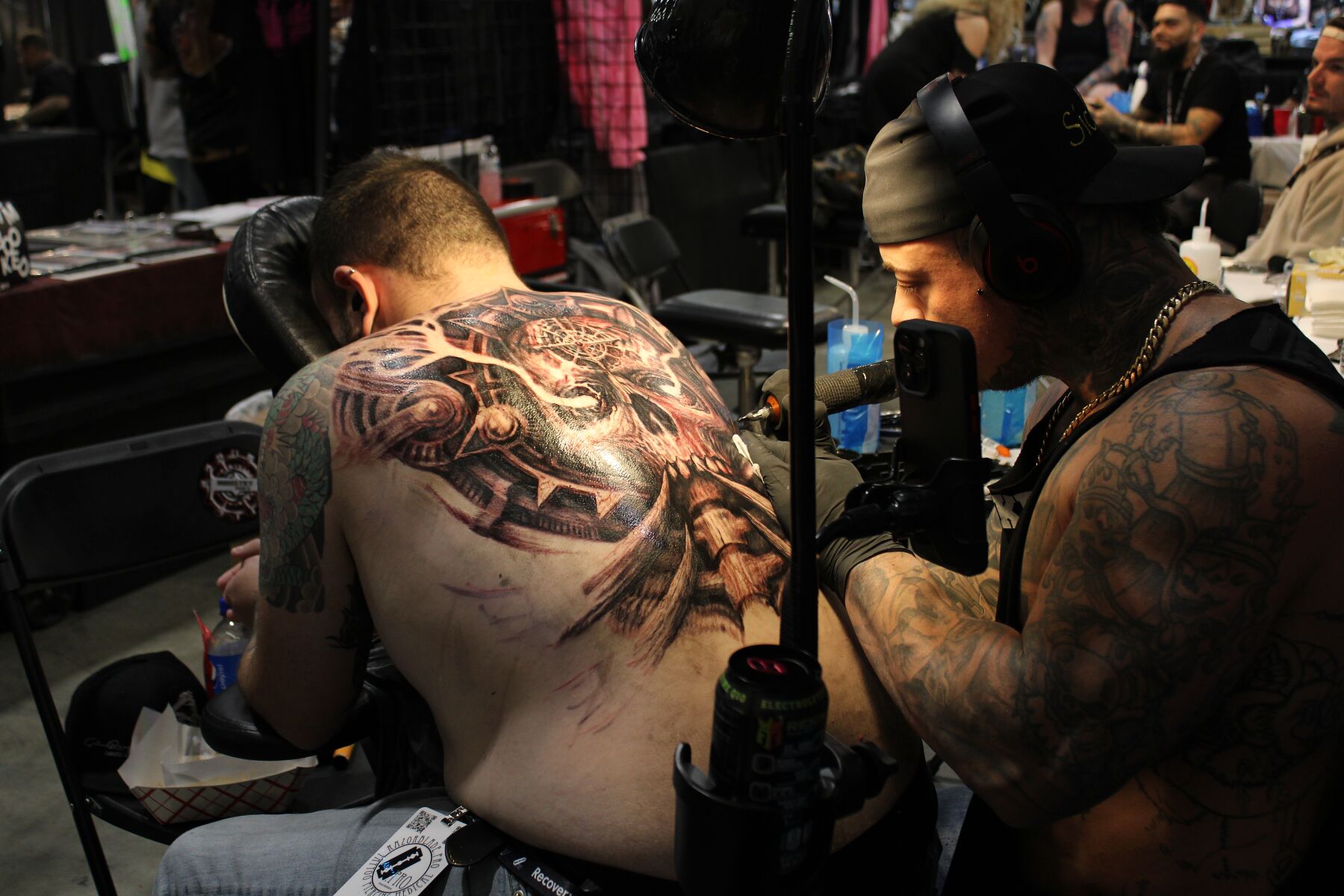
We hear it constantly. Someone tells us about a tattoo they have been thinking about for six years, describes it in detail, and then says the same sentence: “but I am scared of the needle.” Then they say it apologetically, like it is a character flaw.
It is not a character flaw. It is one of the most common fears there is, and the research on it is much better than most people realise.
First, the number that usually helps
A systematic review and meta-analysis pooling 35 studies found that needle fear affects the majority of children, 20 to 50 percent of adolescents and 20 to 30 percent of young adults, and that it tends to decrease with age (McLenon and Rogers, Journal of Advanced Nursing). A clinical practice guideline puts adult prevalence at roughly 14 to 38 percent.
So when you tell us you are scared of the needle, you are describing something that up to a third of the adults around you also feel and mostly do not mention.
Worth separating two things, though. Fear is not the same as phobia. A diagnosable needle phobia is genuinely rare, somewhere around 0.5 to 2.1 percent of adults depending on the country studied (PLoS One, 2021). That same review makes the useful point that needle fear “exists on a continuum of severity from dislike and discomfort to phobia.” Most people who tell us they are terrified are somewhere in the middle of that line, not at the far end. That matters, because the middle of the line is very workable.
If you are in the small group with a genuine clinical phobia, a tattoo advisor is not who you need first. Say so and we will tell you that honestly.
What the evidence actually supports
Exposure works. It is the only thing with strong backing.
The expert-panel clinical practice guideline recommends in vivo exposure-based therapy as the primary evidence-based treatment for high needle fear in both children and adults (CPG, supported by a systematic review of 11 trials). In plain terms, graded, controlled contact with the thing you are afraid of, done deliberately rather than accidentally.
Practically, that is why we do not send anyone straight into a six-hour back piece. A small, short, low-stakes first session is not a compromise. It is the intervention.
Applied tension is real, but it is not magic
Applied tension means deliberately tensing your large muscles to raise blood pressure and stop the drop that causes fainting. In a randomised trial with 95 highly needle-fearful adults it raised cerebral oxygenation and end-tidal carbon dioxide, which is a real physiological effect. But presyncopal symptoms did not actually differ between groups (Kowalsky et al., Journal of Behavioral Medicine). It has stronger support in blood donation research, where it reduces vasovagal symptoms and fainting (Vox Sanguinis).
So: useful if you are someone who goes grey and light-headed. Not a guaranteed fix for pain or panic.
The breathing thing is oversold
This one surprised us. In the same trial, a brief audio-trained breathing intervention performed no better than no treatment at all (Kowalsky et al.). Every article on the internet tells you to breathe. Five minutes of breathing instruction on the day is not proven to do anything.
We still teach breathing, because rhythm gives you something to hold on to and because stress genuinely does affect pain, which we will get to. But we teach it in advance and we practise it, rather than announcing it to you while you are already on the table.
Distraction: promising, thin evidence
Virtual reality during actual tattooing has been studied, but only at pilot level: 16 customers, one artist, low-pain body sites (Frontiers in Virtual Reality, 2021). Treat it as interesting, not established. Ordinary distraction, meaning conversation, music and a person you trust in the room, has no trial behind it that we could find, but it costs nothing and nobody has ever regretted it.
The finding that changes how we plan sessions
Everyone asks which spot hurts least. The largest study we could find, covering 1,092 tattooed adults, found that body area did not significantly predict pain during tattooing or after it. What did predict pain during the session was session duration and stress level, both highly significant (Witkoś and Hartman-Petrycka, IJERPH 2020). Mean reported pain was 4.35 out of 10 during, and 2.07 after.
Read that again, because it is the single most useful thing on this page. How long you sit and how wound up you are matter more than where on your body the tattoo goes.
Which means the levers are ones you actually control. Shorter sessions. Eat properly beforehand. Do not schedule it for the morning after a red-eye. Do not book it on a day you are already stressed about something else. Do not arrive hungover, which we should not have to say and yet.
The popular tattoo pain charts, the ones ranking ribs at nine out of ten and outer arm at three, are commercial and anecdotal. Healthline publishes one and Removery ran a survey-based version. We could not find clinical validation for any of them. They are consensus, not evidence. Body area did predict radiating pain in the study above, so placement is not irrelevant, just far less decisive than the internet claims.
Numbing cream: read this part carefully
People ask about numbing cream constantly and the honest answer is more complicated than either the sellers or the purists will tell you.
The FDA has warned consumers not to use certain over-the-counter topical anaesthetics marketed for cosmetic procedures including tattooing, and has issued warning letters to six companies whose products carried lidocaine above permitted OTC concentrations. High-concentration lidocaine applied over large areas, on irritated or broken skin, for long periods or under occlusion may cause irregular heartbeat, seizures and breathing difficulties, and can interact with other medicines (FDA). Named products include TKTX and NumbSkin (FDA warning letter, February 2025). Note the phrase “broken skin.” That is what a tattoo in progress is.
Mayo Clinic notes that tattoo artists generally do not use anaesthetic (Mayo Clinic).
You will also read that numbing cream ruins the tattoo, makes skin rubbery, causes ink rejection. We looked for evidence of that and could not find any peer-reviewed work either way. Plenty of artists believe it. That is a real professional opinion worth respecting, but it is not the same as proof, and we are not going to present it as one.
Our position: if you want to use something, that conversation happens with your artist and, if you take other medications, with a pharmacist or doctor. Not with a review on a marketplace listing.
What we actually do about it
None of the above is useful as a list of facts. It is useful as a plan, which is the part we handle.
- We size the first session to the fear, not to the design. Small and short first, if that is what it takes. The design can grow later.
- We work on the stress variable, because the data says it is one of the two that matter. That means timing, food, sleep, and not stacking the appointment on top of a travel day.
- We teach the coping techniques in advance and practise them. Applied tension if fainting is your pattern. Rhythm and distraction otherwise.
- We fill the artist in before you arrive. So you never have to open with an apology, and so they already know to talk you through what they are doing and to break when you need one.
- We tell you when to seek someone else. If this is a genuine phobia rather than fear, exposure therapy with a clinician is the evidence-based route and we will say so.
The thing we want you to take away: being scared is not the obstacle. Being scared and having no plan is the obstacle. Those are different problems and only one of them is yours to solve alone.